


Icelandic Chicken Hatching Eggs
Icelandic Chicken Hatching Eggs
Couldn't load pickup availability
{SOLD OUT}
Price is per 5 hatching eggs. All hatching eggs are sold in multiples of 5
When there is overstock, a couple additional eggs might be added to an order at no additional cost!
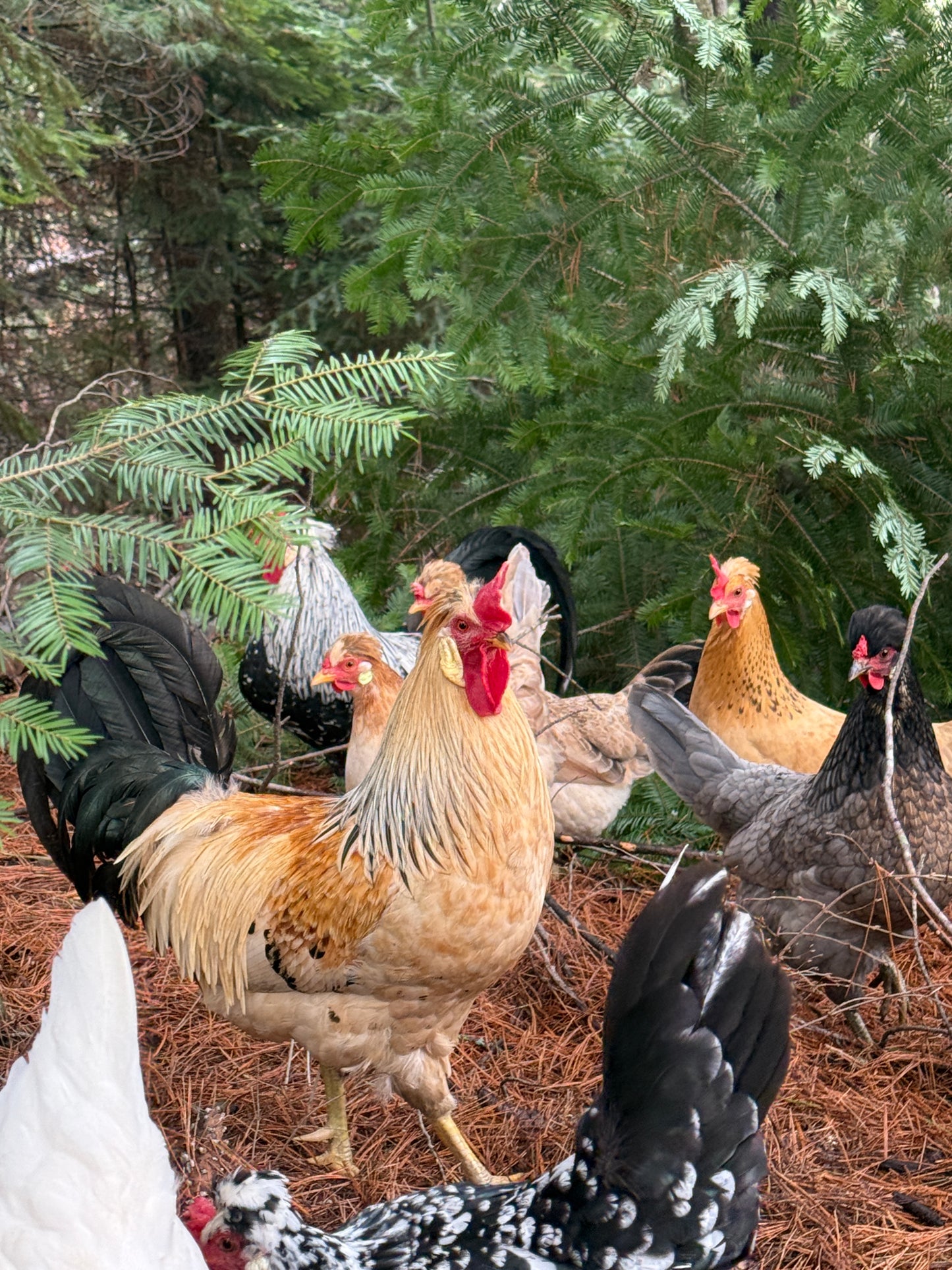
In my opinion, Icelandic chickens are one of the very best free-range chickens for a self-sufficient homestead. Mine hardly require food from me since they have acres of wild pasture and woodland to forage. If you're looking for a cold-hardy breed that requires minimal care, excels at foraging its own food and evading predators, and reliably hatches their own chicks, this may be the perfect breed for you.
Just keep in mind: these birds love to roam. While they can adapt to a coop and enclosed run like modern chicken breeds, they are the true definition of a free-range chicken and are happiest with space to explore. They are highly active, excellent foragers, predator resistant, and willing to travel farther than most breeds to forage for their favorite foods. They will always return home (especially if food is waiting) and I've even trained mine to come running when I whistle.
Icelandic chickens are a true landrace breed, developed over centuries by Viking settlers in Iceland’s harsh environment. With scarce food and high predator pressure, only the toughest, most resourceful birds survived and bred. This selective pressure created a small, athletic, predator resistant chicken with strong survival traits:
- Excellent foragers
- Highly alert to threats
- Can fly high into trees and across fields to escape danger
- Very cold hardy and adaptable to many regions
Because they were bred strictly for utility and survival rather than standardized appearance, there is significant natural variation in plumage colors, patterns, and comb types. Two common (but not universal) features are a distinctive little crest of feathers on the head that resembles a tiny helmet, and white or cream colored earlobes. They are among the best winter laying breeds available! A few hens from each flock will regularly go broody in spring, so they can hatch out more viking chickens once you have a flock established!
Size & Production
Hens: 3 – 3.5 lbs
Roosters: 4.5 – 5.5 lbs
Egg Production: 150–200 eggs per year
Egg Size: Small to medium
Egg Color: White to cream/tinted
Broodiness: Somewhat
Temperament & Behavior
Icelandic roosters are generally non-aggressive, though they may have occasional squabbles to establish pecking order. They are tolerant of other roosters they grew up with, and their own offspring. The birds themselves tend to be flighty and wary, especially if not handled regularly from a young age. They are not lap chickens, but with calm, slow movements and consistent gentle interaction, they can learn to trust their owners. Despite their flighty nature, they are very home-oriented and will stay close as long as food is available. You may find that they prefer to roost in a nearby tree rather than their coop. Mine roost about 10 feet high in a hawthorn tree next to the coop at night, which I believe keeps them safer than most coops can, but most or all of them lay in the coop where they feel safe and secluded.
If your chickens decide to lay eggs in nature instead of their coop, you can provide a nest box, or even a sideways bucket with clean straw bedding in it near their favorite places to hang out in the mornings. Place one egg, fake egg, or even a golfball on the bedding, and soon enough they should start laying eggs in the nest, so its no longer an easter egg hunt for you every morning!
Why My Family Loves This Breed
With their fun assortment of colors, high energy, and excellent ability to forage and protect themselves even in tough northern climates, Icelandic chickens have become one of our absolute favorite breeds. In our home, a member of the family can often been seen watching the "chicken show" out the kitchen window as our little viking chickens scratch around and socialize at the edge of our woods. They truly thrive with minimal intervention while still providing a steady supply of fresh eggs.
If you’re ready for a unique, self-sufficient, and resilient homestead chicken, I’m confident you’ll fall in love with the Icelandic landrace too!
My flock comes from pure stock imported from Iceland by David Grote of Whippoorwill Farm and Studio, and other local breeders.
We do not guarantee the hatch rate or fertility rate of hatching eggs! Your results will be anywhere from 0% - 100%. You are purchasing eggs not chicks! Do not purchase eggs if you are not comfortable with this risk. As a reminder, we cannot control: shipping conditions, conditions under which you incubate your eggs, abrupt and unpredicted changes in mating and egg laying, as well as knowing if a particular egg was fertilized at the time of lay.
Incubating Your Shipped Eggs
Please read and follow your incubator’s instruction manual and conduct your own research. Improper incubation can result in embryo death and a failed hatch. We do not guarantee fertility rates or hatch rates.
Pre-Incubation Preparation
• Run your incubator at the recommended temperature and humidity for at least 10 hours before placing your eggs inside. This ensures the environment is stable when eggs are added.
• Allow shipped eggs to rest pointed side down for 12–24 hours after arrival.
• It is strongly recommended to use two thermometers and two hygrometers as a backup in case one fails.
Days 1–17
• Temperature:
– 99.5°F (recommended) if your incubator has a fan. Acceptable range: 99–100°F.
– 100–101°F if using a still-air (no fan) incubator.
• Humidity: 45–55% recommended for the first 17 days.
• Egg Turning: Eggs must be turned regularly throughout incubation. An automatic egg turner is highly recommended. Monitor it closely to ensure it is working properly.
Load eggs according to your incubator’s instructions (typically pointed side down in cabinet-style machines).
If turning by hand, turn eggs every 4–6 hours (never longer than every 8 hours).
• Candling: You may begin candling after day 7. Look for visible blood vessels and a small dark spot (the embryo). As the embryo grows, the egg will appear darker, but the air cell should still be visible. Remove and discard any eggs that show no development or have stopped developing. Note: Dark-colored or brown eggs are more difficult to candle.
Days 18–20 (Lockdown Period)
• Stop all turning and remove the automatic egg turner.
• Candle the eggs once more and discard any that did not develop properly or died during incubation.
• Increase humidity to 65–70%.
• Do not open the incubator until the chicks have fully hatched and dried.
Day 21 – Hatch Day
• Leave the incubator closed! Do not open it until all chicks have hatched and are completely dry and fluffy.
• Chicks will not hatch at the same time. Early hatchers are fine to remain in the incubator while others finish hatching. They hatch with enough yolk nutrients to sustain them for the first few days.
• Opening the incubator too early can reduce hatch rates for the remaining eggs.
• Once all chicks are fully dry and fluffy, move them to a prepared brooder.
Happy Hatching!
Share


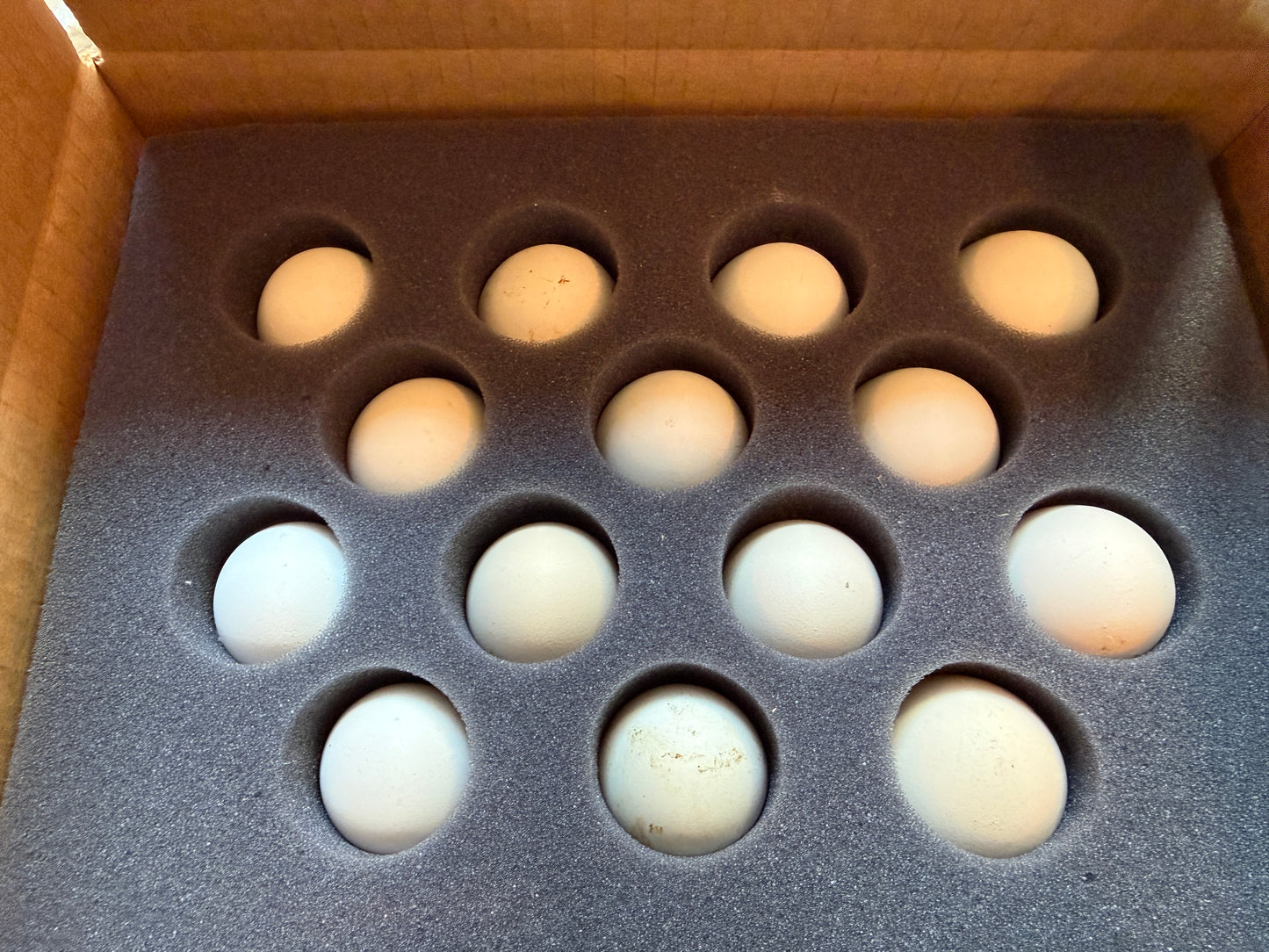
I ordered 6 eggs. 4 hatch. So far I’m happy with everything.
Nothing was broken. All eggs were in shipment. Shipment included detailed instructions. Shipment was mailed Monday instead of Friday and arrived on Saturday instead of Wednesday. I would buy from this supplier again.
Thank you for the awesome eggs. I can't wait to see the babies once they hatch.
Beautiful and healthy birds. I bought 6 eggs and 5 hatched. First time hatching. I call that very successful 😊
The eggs arrived with no problems they are in the incubator let’s see how many hatch will update around the 25 of june